Lots of ‘remarketing’ on Google and Facebook/Instagram isn’t what it’s cracked up to be. Wanna know why you’re not seeing the results you thought you’d get? Here’s what you’re doing wrong, and how to nail it next time.
“Re” as in “again”, right?
So you’re running remarketing ads for your brand after seeing all the case studies online preaching how great they are.
But it just seems like they aren’t working. Your audiences are relevant, your site converts well, but something about your remarketing just isn’t panning out. What gives?
There’s a chance you’ve fallen into a very common trap. Luckily for you, there’s an equally common way out of it- I’m here to show you what it is.
Remarketing can also be called retargeting (strictly they’re different but are largely used as synonyms in the digital age), and people get bogged down in the targeting part of that.
It’s straightforward to create audiences of basket abandoners, browse abandoners, checkout abandoners; if they’ve abandoned it, you’re tracking it…
And then hit them all with exactly the same ad you’re already using somewhere else. There’s you’re problem right there. Maybe you increase your bid for the new ads, so customers see them more often. So what? It’s the same ad. They don’t know what you’re bidding. They probably couldn’t care less.
Remarketing isn’t just running the same ads to a mid-funnel audience! Not if you’re doing it right.
Consider Context
We’re all aware of funnels in marketing, right? There’s that common acronym, AIDA: Awareness, Interest, Desire, Action. Every step is closer to conversion until the customer’s handing over their cash. It’s easy to line up the AIDA model (or your preferred acronym) against your website activity:
- Awareness: Ad impression/click
- Interest: View products
- Desire: Add to cart/begin checkout
- Action: Cold hard conversions!
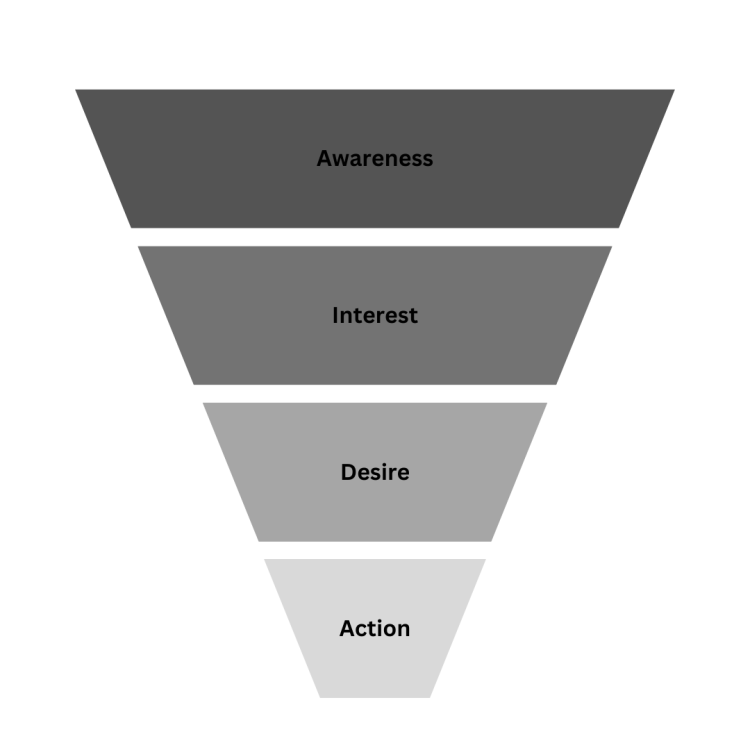
This is technically true, but can miss the point big-time. And when it does, your remarketing might suffer.
People don’t just happily click through our websites until they arbitrarily decide to stop or convert. If their progress through that journey slows or stops, there’s a reason why.
If you’re not actively finding out why and addressing it, your remarketing ads will always be a shadow of what they could be.
How your buyer sees their journey
To really understand this, think about the customer journey as a funnel again- this time, from a buyer’s perspective.
They don’t think in terms of add to cart and checkout- they think in terms of starting with a problem and ending up with a solution they’re happy to pay for. To a user, the funnel looks more like this (some creative license taken with the AIDA acronym!):
- Awareness: “I know I have a problem, and I know a solution exists”
- Interest: “I’m starting to understand which brands & products can help me, as well as which can’t”
- Decision: “I’ve got a shortlist of potential brands/products and now I’m splitting hairs over my decision”
- Action: “I’m buying a product which my research so far tells me will fix my problem”
Looking at the above, you can still see where browsing a website, adding to cart, purchasing etc all take place;
But from this view they’re necessary steps in the journey the customer is really on, not the goal themselves.
Every time a customer stops mid-journey, it’s because they’ve got doubts about whether your product is the one that’ll solve their problem.
You need to convince them it is- either by using new information or by reframing what they’ve already seen.
From “Top of Mind” to “Top of The List”
As users move through their purchase journey, they refine their priorities and consider different sets of factors in their decision.
Lots of remarketing is sub-par because it doesn’t evolve with customers’ priorities, it just reiterates the same top-of-funnel selling points.
Consider this ad ASUS are running at the time of writing:
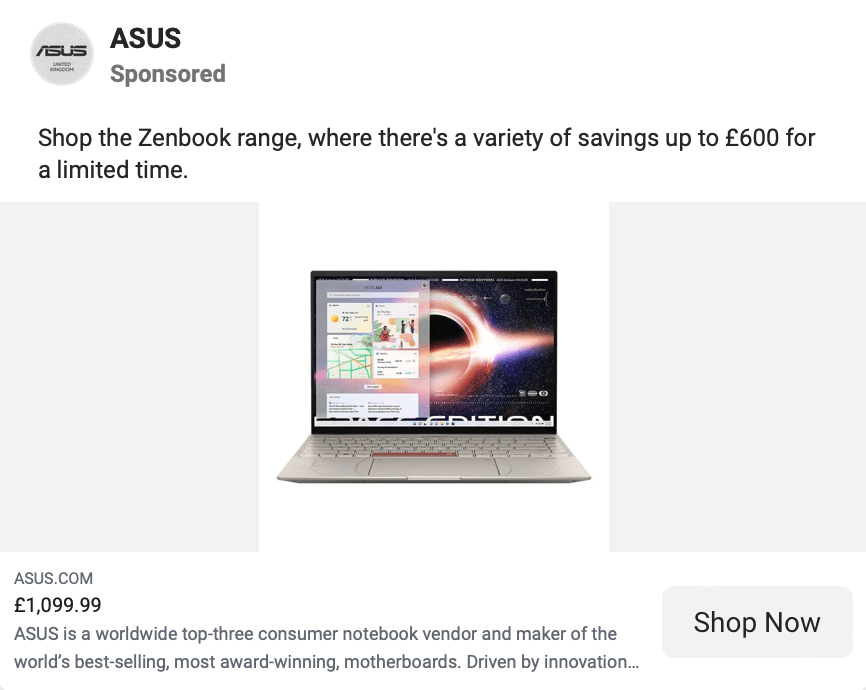
The mention of savings up to £600 is a great incentive to get most users browsing, but if the same users don’t add anything to their basket or fail to checkout, will it bring them back?
Most people shop around for a laptop. At this time of year, everyone’s running a sale on computing products. You’ll need to stand out on more than just price!
- Can you boast the best battery life? For students and professionals that’s a top priority.
- Is your screen super-sharp and more vibrant than the competition’s? Are your speakers best-in-class? Anyone looking for a new Netflix-in-bed machine will love that.
- Do you bundle in useful software user will want- or leave out the crap that’ll go unused anyway and just clog up storage, for a better user experience?
- Speaking of storage, if you’re targeting creative types who edit photos and videos on the go, tons of storage and quick connectivity are huge wins. So are high-powered graphics hardware.
Here’s a better example from ASUS- it’s probably aimed at cold users, but the fact it calls out a specific strength makes it useful for mid-funnel shoppers too.
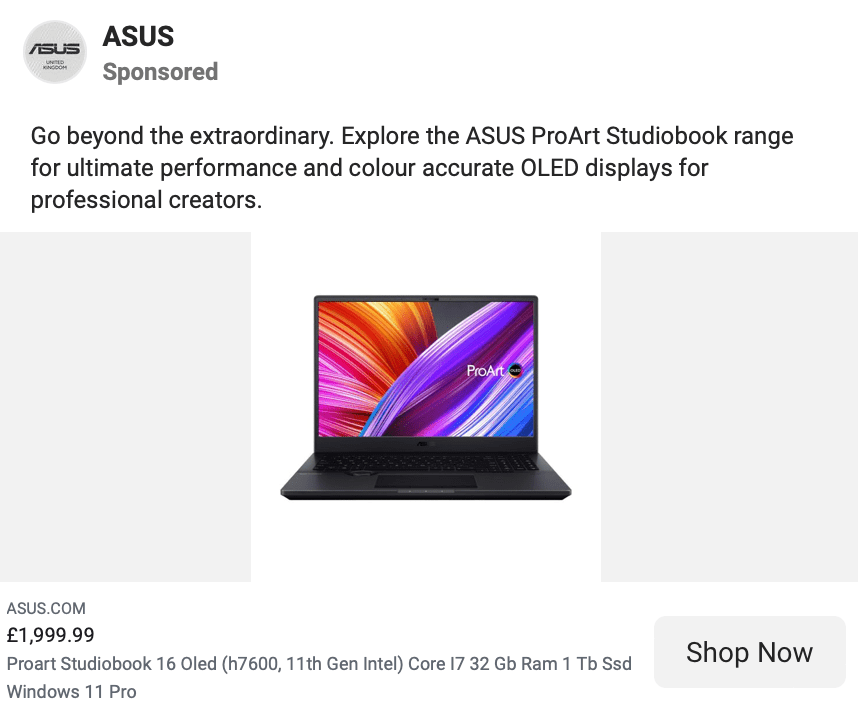
It’s not like you should leave these factors out of your top-of-funnel ads, but when users are evaluating ASUS against Dell, Apple or Samsung they’ll be considering all these things.
If your brand is big enough to have a pile of reviews you can dig into, see why your customers say they picked you.
If you’re smaller than that- reach out to your customers and ask them! Offer them something in exchange and they’ll love the attention and be happy to help.
As for cart abandoners, consider the point they dropped off-
Could there be a fulfilment or delivery issue? An out of stock product with no predicted return date? Could buyers be weighing the same product up from different retailers, and what could swing their choice your way?
You’ve made it to the shortlist- now it’s time to keep your name at the top of it.
Here’s How The Pros Are Doing It
To prove this is a tried-and-true method, here are a few examples I liked from companies big enough to know their stuff:
O2: Incentives to buy
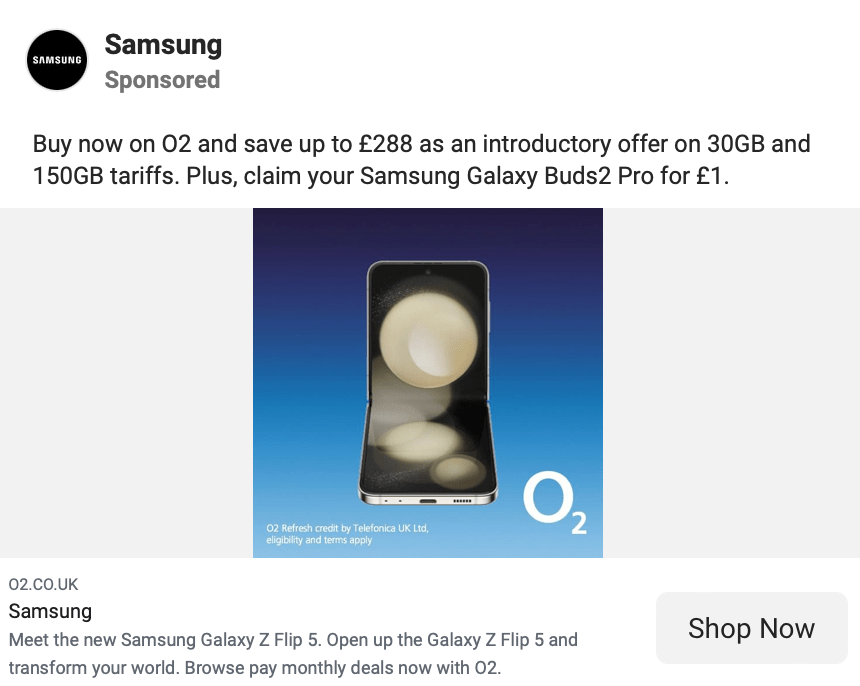
O2 know that once you’ve decided on your next phone, you’ll shop around for the best tariff across all the networks and retailers.
They want you to pick them, so they’re putting their best offers front and centre on Samsung’s latest handset. Easy!
Volvo: Car subscription
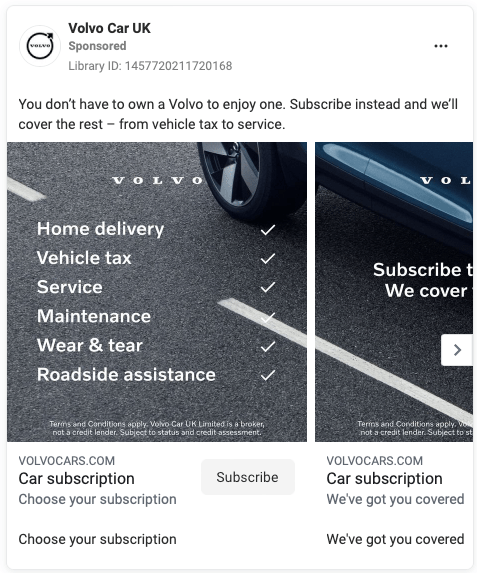
Buying a new car takes aaaaages and savvy buyers will make sure to factor in servicing and maintenance into their budget, just for a start. By giving you the chance to bundle all your costs into one payment, Volvo makes the shopping-around process that much easier. Maybe a BMW would work out cheaper once you crunch the numbers, but the absence of doubt is worth a few quid in many cases.
In fact, by giving you the certainty other manufacturers might not, Volvo are putting themselves leagues ahead. “We see you looking at our cars, and we want to make it as easy as possible for you to have one”- powerful messaging.
Halford: Interest-free instalments
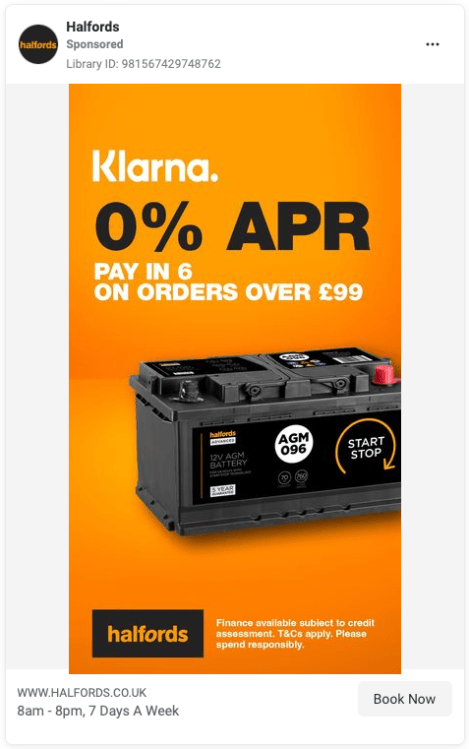
If you’re shopping around for car parts- especially consumables like tires or batteries- you’re probably facing an unavoidable purchase with a hefty price tag. By giving you the option to spread that cost interest-free, Halfords don’t need to be the cheapest: they just need to be in the right ballpark and the flexibility for your wallet gives them the edge from there.
Halfords have really put themselves in their buyer’s shoes here, and it’s working.
“Re” as in “again”, but not “again” as in “copy-and-paste”
So the next time you’re trying to remarket to your website visitors or existing customers, ask yourself:
Is this just a generic ad that I’m aiming at mid-funnel customers? Or does it actually keep me in the fight for customers who are in decision mode?
Once a buyer knows a bit more about what they want, are my remarketing ads keeping me in the game by addressing the finer points of my customer’s decision?
I used to work with a guy who’d scroll through our clients’ websites praising how good their products were. “Why would you not want it?”, he’d ask nobody in particular. Great vote of confidence, but not very impactful.
It’s your job to answer that question as many ways as you can- and put that answer where your customers can see it so they know it too. That’s how to really run remarketing ads.
 Joe Robinson: Bald Guy, Marketer, Self-Improver.
Leave a comment